




Groundwater and surface water are two vital components of the Earth's hydrological cycle, playing distinct roles in sustaining ecosystems and meeting human needs.
Nova Group Pacific is a leading expert in the field of groundwater and surface water assessments, providing a comprehensive suite of services to identify potential risks to human health and the environment. Our assessments are often requested as part of Development Applications (DA), Preliminary or Detailed Site Investigations, or as a requirement of an Environmental Protection Licence or Petroleum Site.
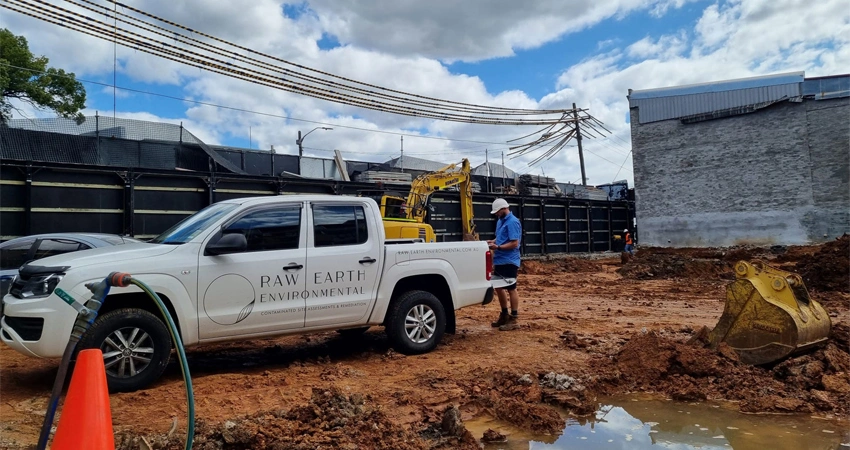
Nova Group Pacific specialises in the installation and meticulous monitoring of groundwater wells. These wells serve as crucial points for assessing groundwater quality and quantity. Our experienced team ensures the proper installation of wells to obtain accurate data, employing advanced technologies for continuous monitoring. This process allows us to identify potential contaminants and track changes in groundwater levels over time.
Our commitment to precision in well installation and monitoring ensures the reliability of the data collected, supporting informed decision-making in various environmental and developmental contexts.
In cases where groundwater contamination is identified, Nova Group Pacific excels in implementing effective remediation strategies. Our expertise includes the application of various remediation techniques, such as pump-and-treat systems, bioremediation, and innovative technologies. We prioritise restoring groundwater quality to meet regulatory standards and protect human health and the environment.
Our remediation efforts are tailored to the specific characteristics of the contamination, ensuring a targeted and efficient approach that aligns with environmental best practices.
Nova Group Pacific conducts comprehensive monitoring of surface waters to assess water quality and identify potential pollutants. Our monitoring programs encompass rivers, lakes, and other surface water bodies. We employ state-of-the-art equipment to collect precise data, enabling us to detect changes in water chemistry, nutrient levels, and the presence of contaminants that may impact aquatic ecosystems and human use.
Our commitment to advanced monitoring techniques allows us to provide clients with accurate and timely information on the state of surface water bodies, facilitating proactive environmental management.
Our services extend to the assessment of leachates and trade wastes, addressing potential sources of contamination. Nova Group Pacific employs rigorous testing and monitoring protocols to evaluate the impact of leachates and trade wastes on groundwater and surface water quality. This proactive approach ensures compliance with environmental regulations and facilitates early intervention to prevent adverse effects.
Our assessments of leachates and trade wastes contribute to a holistic understanding of potential environmental risks, supporting sustainable practices and regulatory compliance.
Nova Group Pacific excels in the interpretation of analytical data derived from groundwater and surface water assessments. Our team possesses the expertise to analyse complex datasets, draw meaningful conclusions, and provide actionable recommendations. This critical step enhances decision-making processes, enabling clients to address environmental challenges effectively.
Our proficiency in data interpretation ensures that clients receive not just raw data but valuable insights, empowering them to make informed decisions that align with environmental stewardship.
Groundwater refers to the water present beneath the Earth's surface within the saturation zone, where the soil and rocks are fully saturated with water. It primarily originates from precipitation that infiltrates the ground, percolating through the subsurface layers until it reaches a point where the ground is saturated. This reservoir of water is stored in aquifers, geological formations capable of yielding significant quantities of water. Groundwater serves as a crucial source for wells, springs, and sustains base flow in rivers and streams during dry periods.
Groundwater is susceptible to contamination from various sources, including industrial activities, agricultural runoff, and improper disposal of hazardous waste. Common contaminants include heavy metals, pesticides, fertilisers, and petroleum products. Once contaminants infiltrate the ground, they can persist in aquifers for extended periods, potentially compromising the safety of drinking water supplies and ecosystem health.
In contrast, surface water encompasses all the water found on the Earth's surface in bodies such as rivers, lakes, reservoirs, and oceans. Unlike groundwater, surface water is more visible and susceptible to rapid changes in response to weather conditions. It is directly influenced by precipitation, runoff from melting snow or ice, and inputs from groundwater discharge. Surface water is a key component in supporting various ecosystems, providing habitat for aquatic life, and serving as a primary source for human activities, including agriculture, industry, and municipal water supply.
Surface water bodies face contamination risks from point and non-point sources. Point sources include industrial discharges and wastewater treatment plant effluents, while non-point sources involve runoff carrying pollutants from urban areas, agricultural fields, and construction sites. Common contaminants in surface water include sediments, nutrients, pathogens, and synthetic chemicals. Elevated contamination levels can impair water quality, harm aquatic life, and limit the usability of surface water for various purposes.
Groundwater and surface water contamination pose significant threats to the quality of these water resources.
Our specialists are ready to guide you through every stage of your project—from initial assessment to final execution. Get expert advice that ensures safety, efficiency, and long-term performance.
Complete the form below and one of our team will get back to you within 24 hours.
Our FAQs are designed to provide clear, concise answers to common questions, helping you better understand our approach, services, and how we support projects from initial assessment through to delivery.
Surface water and groundwater differ primarily in their location and movement within the hydrological cycle. Surface water is found above the Earth's surface in rivers, lakes, and oceans, influenced directly by weather conditions. In contrast, groundwater resides below the surface in aquifers, saturated zones within the Earth's subsurface. Groundwater moves slowly and is less affected by immediate weather changes compared to the more dynamic surface water.
Groundwater is measured through various techniques, including the installation of monitoring wells, piezometers, and use of advanced technologies such as pressure transducers. Monitoring wells allow direct access to groundwater, enabling the measurement of water levels over time. Piezometers provide continuous measurements of pressure within aquifers. Advanced tools like electromagnetic or acoustic methods also assist in assessing levels and flow, contributing to a comprehensive understanding of groundwater dynamics.
Groundwater monitoring involves systematic and regular assessment of groundwater levels, quality, and other relevant parameters. It includes the installation and maintenance of monitoring wells, periodic sampling, and continuous measurements to track changes over time. This proactive approach helps identify potential contamination, assess sustainability, and guide effective groundwater management practices.
Assessing groundwater quality for drinking and irrigation involves thorough chemical analysis of water samples. Parameters such as pH, dissolved oxygen, nutrients, and contaminants are measured to ensure compliance with water quality standards. Additionally, assessing the suitability of groundwater for irrigation includes evaluating factors like salinity and specific ion concentrations to prevent soil degradation over time.
A surface water assessment is a comprehensive evaluation of the quality and conditions of rivers, lakes, and other above-ground water bodies. It includes monitoring physical, chemical, and biological aspects to assess water quality, identify potential pollution sources, and determine the overall health of aquatic ecosystems.
Surface water is measured using a combination of field measurements and remote sensing technologies. Field measurements involve instruments such as flow metres to determine discharge, water quality sensors for chemical parameters, and depth gauges for water levels. Remote sensing tools, like satellites and drones, provide broader spatial data for large water bodies, contributing to a holistic understanding of surface water conditions.
Whether you're early-stage or ready to build, this tool helps you work out what reports you need — and how to bundle them into a single site visit.
Fast. Free. Custom to your stage.

We provide sustainable contaminated land, remediation, and geotechnical consulting services across Australia.


