








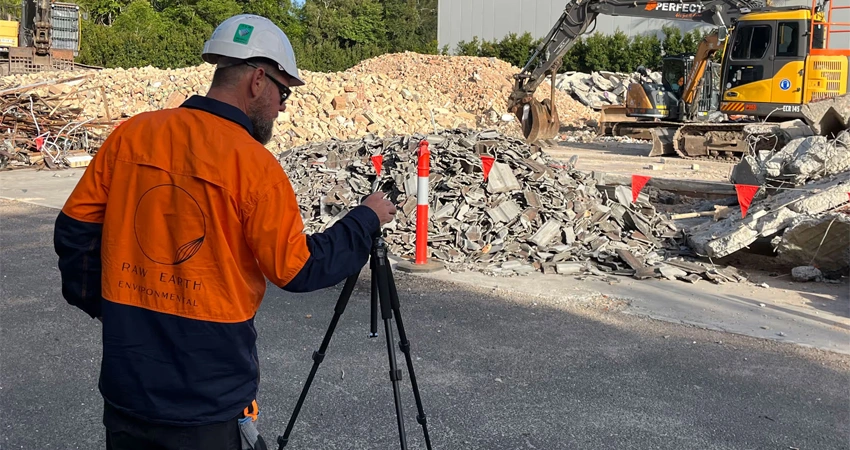
Environmental compliance is the adhering to legal regulations and standards that protect the environment, ensuring that businesses and industries operate responsibly. In Australia, these laws encompass various areas including air quality, waste management, water protection, and biodiversity conservation. Non-compliance can lead to significant penalties, project delays, or even shutdowns.
At Nova Group Pacific, we provide expert guidance to industrial and commercial sectors, ensuring that all environmental obligations are met. We work closely with clients to ensure compliance with local, state, and federal regulations, offering comprehensive assessments, monitoring, and reporting services tailored to their specific needs.
For more detailed insight into how we assist with environmental compliance during construction projects, you can read our article on Navigating Environmental Compliance in Construction.
While environmental compliance focuses on adhering to broad regulatory frameworks, a Construction Environmental Management Plan (CEMP) is a project-specific tool. The CEMP outlines strategies to mitigate environmental risks and is used primarily in construction projects, ensuring site-specific compliance.
In contrast, our environmental compliance services apply to a wide range of industries, covering all facets of operational impacts and regulatory requirements beyond construction, including industrial activities and large-scale developments.
Our expertise in navigating Australia’s complex environmental regulations sets us apart. We help businesses avoid penalties and streamline their operations by ensuring they meet all environmental obligations. Whether you’re in construction, manufacturing, or large-scale development, Nova Group Pacific provides the necessary support for full compliance with Australian environmental standards.
Our FAQs are designed to provide clear, concise answers to common questions, helping you better understand our approach, services, and how we support projects from initial assessment through to delivery.
Legal responsibility for environmental compliance can apply to both the developer and the contractor, depending on approval conditions, environmental licences and contractual arrangements. In most cases, regulators pursue the approval holder first, even if non-compliances arise from contractor activities identified through monitoring or an environmental audit.
The most common environmental compliance issues on construction sites include dust and air quality exceedances, noise complaints, uncontrolled water discharge, poor waste management and failure to implement approved mitigation measures. These issues are frequently identified through site inspections, monitoring programs or environmental audits.
If environmental monitoring or an environmental audit identifies a non-compliance, corrective action is typically required immediately, along with documentation and, where applicable, regulator notification. The response must demonstrate timely identification, appropriate management and measures to prevent recurrence.
Environmental approval conditions are applied during construction through site-based controls such as monitoring programs, inspections, trigger action response plans, reporting requirements and periodic environmental audits. These controls must be actively managed and updated as construction activities and site risks change.
Developers demonstrate environmental compliance through evidence such as monitoring data, site inspection records, environmental audit findings, incident logs and corrective action tracking. Maintaining accurate and consistent records is essential for regulator audits, stakeholder reporting and complex construction projects.
Whether you're early-stage or ready to build, this tool helps you work out what reports you need — and how to bundle them into a single site visit.
Fast. Free. Custom to your stage.

We provide sustainable contaminated land, remediation, and geotechnical consulting services across Australia.
Complete the form below and one of our team will get back to you within 24 hours.


