








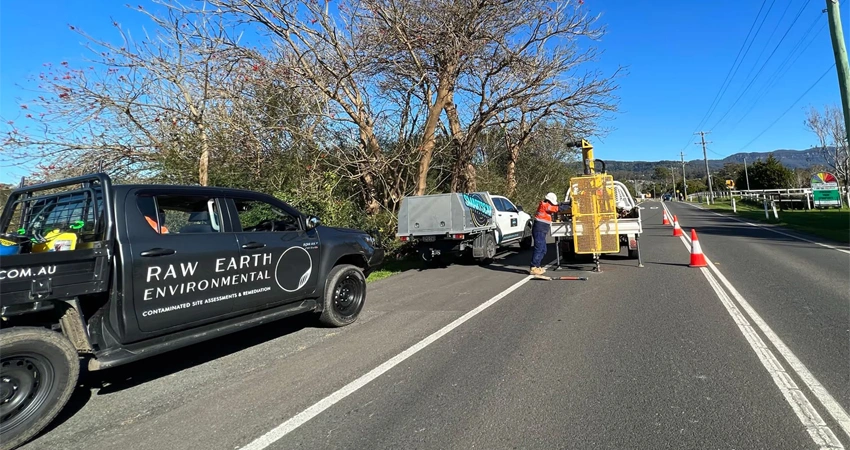
Geotechnical Services are the backbone of every successful construction project, offering the critical knowledge and expertise required to ensure the stability and safety of structures. These services encompass a range of specialised assessments and studies, serving as the cornerstone for informed decision-making in the world of civil engineering and construction.
A Geotechnical Investigation, in essence, is a systematic examination of the subsurface conditions of a construction site. It involves a thorough analysis of the soil, rock, and groundwater characteristics to assess their impact on the proposed project. Geotechnical investigations are indispensable for a variety of applications, including building foundations, roads, bridges, and environmental projects.
Geotechnical engineering is the field dedicated to understanding the behaviour of the Earth's materials under various conditions and how this knowledge can be applied to engineering projects. It is a multidisciplinary science that blends elements of geology, soil mechanics, and structural engineering. The insights gained from geotechnical engineering studies are fundamental for ensuring the safety and durability of structures.
Geotechnical services encompass a wide range of offerings designed to support the construction and development industry. They provide vital information that allows engineers and builders to make informed decisions, ensuring the integrity of their projects.
In the following sections, we will delve deeper into the specifics of geotechnical investigations, the different services they encompass, and how they benefit construction projects. Whether you are planning a new building, a transportation infrastructure project, or an environmental remediation initiative, understanding the role of geotechnical engineering and services is paramount to your success.
Geotechnical services encompass a wide array of specialised assessments and studies that are crucial for the success of construction and infrastructure projects. These services provide valuable insights into the geological and soil conditions of a site, helping engineers and builders make informed decisions. Below, we will explore the key types of geotechnical services:
Geotechnical site investigations are the foundation of any construction project. This service involves a thorough examination of the subsurface conditions to assess soil and rock properties, groundwater levels, and other site-specific factors. The data collected during this investigation informs foundation design, construction techniques, and risk assessment.
Soil testing is an integral part of geotechnical services. It involves collecting soil samples from the site and subjecting them to various laboratory tests. These tests determine soil properties such as density, shear strength, permeability, and compressibility. Soil testing helps in selecting appropriate foundation types, slope stability analysis, and soil improvement techniques.
Foundation design is a critical geotechnical service, as the stability and safety of any structure depend on a well-designed foundation. Geotechnical engineers consider soil and geological data to develop foundation designs that can withstand the expected loads and environmental conditions.
Slope stability analysis is essential for projects located on or near hillsides or slopes. Geotechnical engineers assess the risk of landslides or soil erosion, providing recommendations to mitigate these risks. This service is vital for infrastructure projects like roads and buildings situated in hilly or unstable areas.
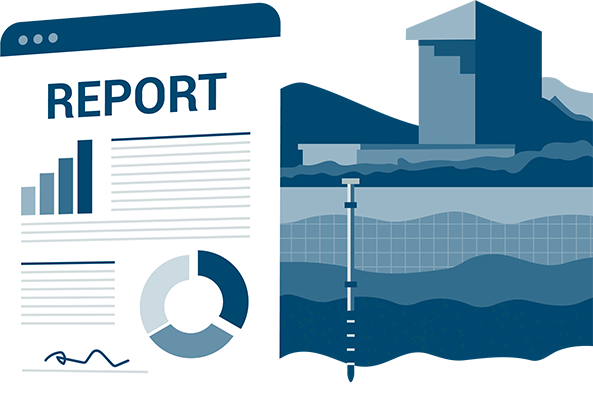
Geotechnical reports summarise the findings of the investigation and testing processes, along with recommendations for construction. These reports are crucial for obtaining regulatory approvals and ensuring that construction projects meet safety and environmental standards.
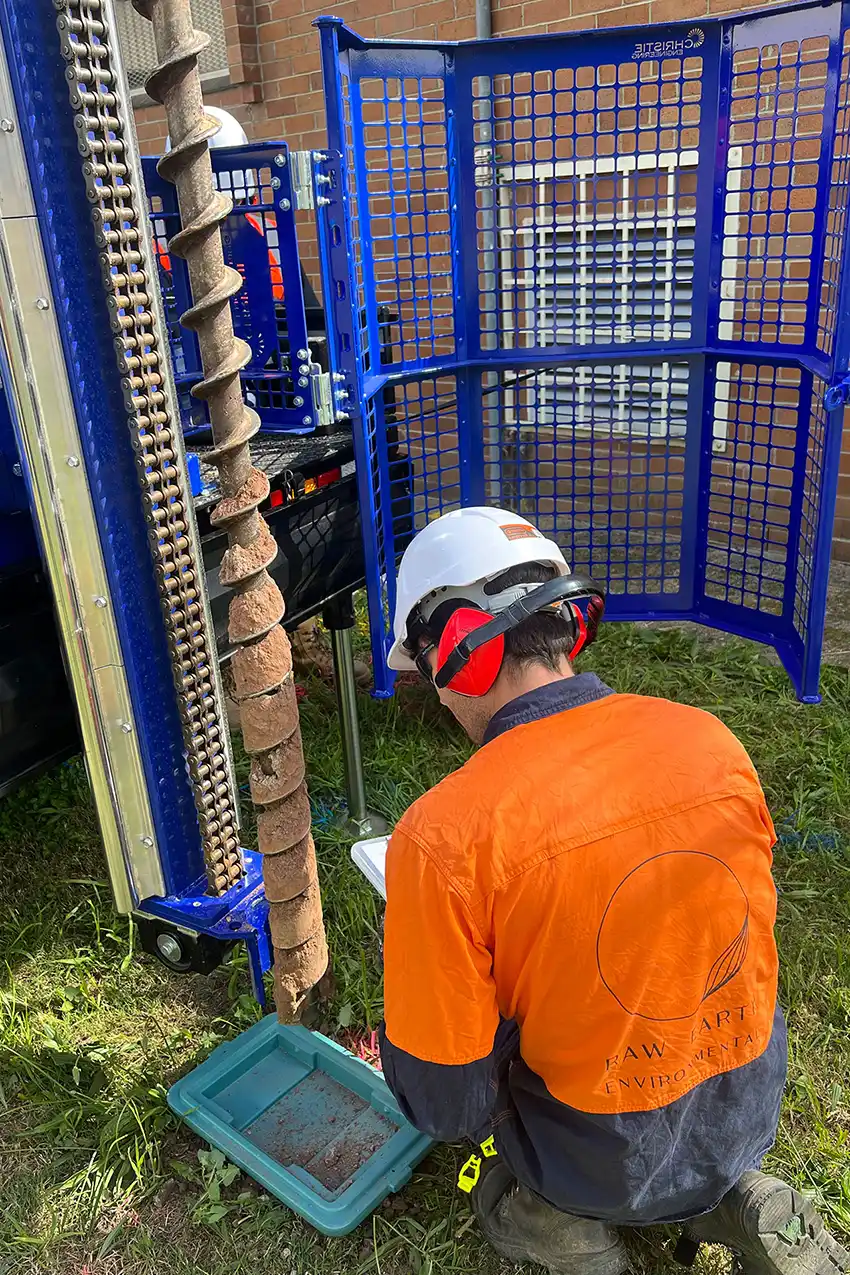
Providing critical data for Sydney's construction projects with advanced drilling techniques for accurate analysis.
Each of these geotechnical services plays a distinct role in the construction process, working together to guarantee the stability, safety, and success of projects, whether they involve buildings, roads, bridges, or other infrastructure.
Our specialists are ready to guide you through every stage of your project—from initial assessment to final execution. Get expert advice that ensures safety, efficiency, and long-term performance.
Complete the form below and one of our team will get back to you within 24 hours.
Our FAQs are designed to provide clear, concise answers to common questions, helping you better understand our approach, services, and how we support projects from initial assessment through to delivery.
A geotechnical survey typically includes a comprehensive assessment of subsurface conditions at a construction site. It involves activities such as drilling boreholes, collecting soil and rock samples, conducting laboratory tests, and assessing groundwater conditions. The survey aims to provide essential information about soil properties, geological features, and environmental factors that can influence construction and infrastructure projects.
The primary purpose of a geotechnical study is to evaluate and understand the geological and soil conditions of a site. These studies are conducted to assess the site's suitability for construction, determine foundation design parameters, analyse slope stability, and identify potential geohazards like landslides. Ultimately, the goal is to mitigate risks, ensure the safety and durability of structures, and optimise the construction process.
A geotechnical engineer is a specialised civil engineer with expertise in the behaviour of soil and rock materials. Their role involves conducting geotechnical investigations, analysing data, and providing recommendations for design and construction. Geotechnical engineers work closely with architects, structural engineers, and construction teams to ensure that projects are built on a solid foundation and can withstand the challenges posed by the Earth's materials.
You need a geotechnical engineer or geotechnical services for several reasons:
Whether you're early-stage or ready to build, this tool helps you work out what reports you need — and how to bundle them into a single site visit.
Fast. Free. Custom to your stage.

We provide sustainable contaminated land, remediation, and geotechnical consulting services across Australia.


